

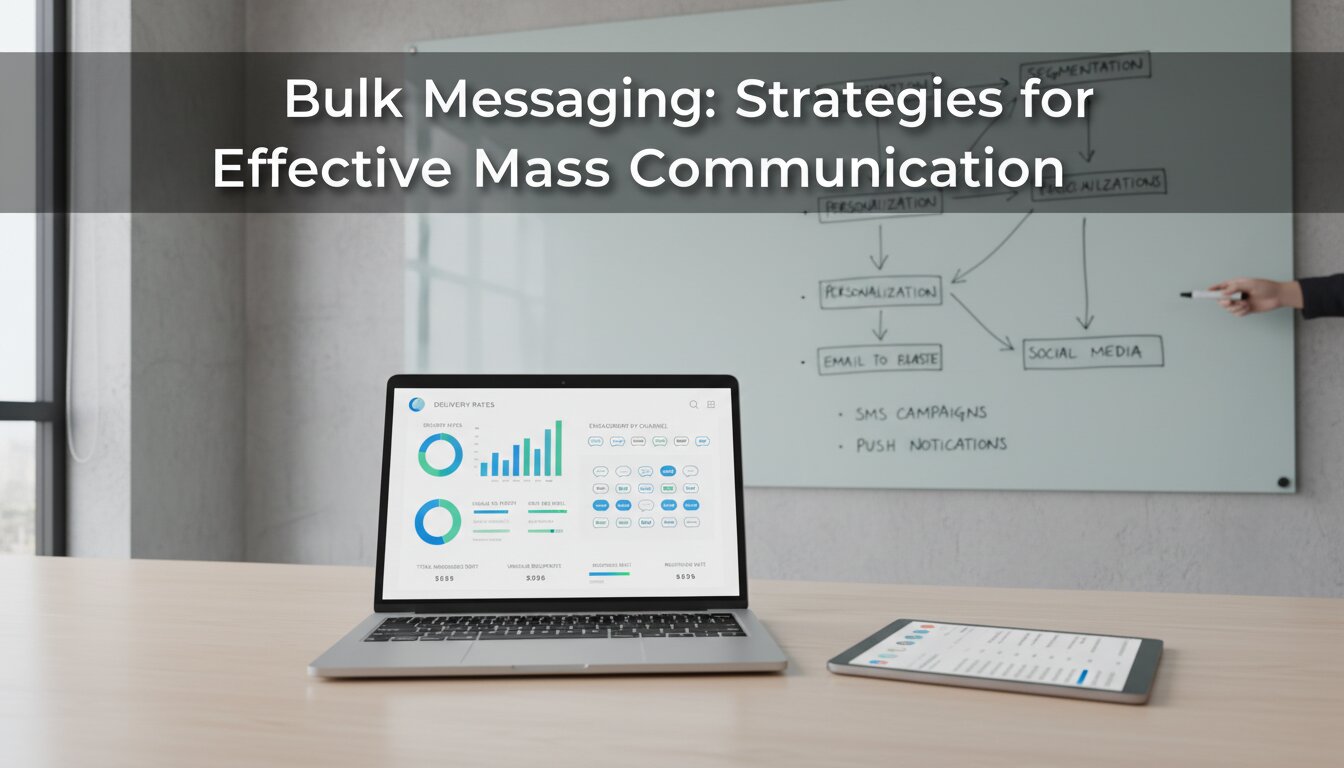
This bulk messaging guide explains strategies, tools, and best practices to improve engagement, targeting, automation, compliance, and analytics, helping businesses send effective, personalized, and timely messages that boost communication and marketing performance.
What is Bulk Messaging?
Bulk messaging is the process of sending a single message to a large group of recipients at once using SMS platforms or messaging software. It is widely used for marketing, alerts, notifications, reminders, and promotional campaigns. In this bulk messaging guide, it is important to understand that bulk messaging is not just about sending large volumes of messages but about delivering the right message to the right audience at the right time. Businesses use it to share updates, offers, and important information instantly. Modern tools provide features like scheduling, automation, and personalization, making communication more efficient. A proper understanding of bulk messaging helps businesses improve customer engagement, maintain consistency, and streamline communication across multiple channels effectively.
Benefits of Bulk Messaging
Bulk messaging offers several powerful advantages for businesses of all sizes. It provides instant communication, high open rates, and a cost-effective alternative to traditional marketing channels. According to this bulk messaging guide, one of its biggest strengths is the ability to reach thousands of users within seconds. It also helps improve customer engagement through direct and personalized communication. Businesses can increase brand awareness, promote offers, and boost conversions efficiently. Additionally, bulk messaging supports automation, which reduces manual workload and saves time. It is especially useful for time-sensitive updates like alerts, reminders, or promotions. When used strategically, it becomes a powerful marketing tool that strengthens customer relationships, improves response rates, and enhances overall business communication efficiency.
Audience Segmentation Strategy
 Audience segmentation is a crucial step in running successful messaging campaigns. It involves dividing your audience into smaller groups based on behavior, interests, demographics, or purchase history. In this bulk messaging guide, segmentation ensures that messages are more relevant and personalized instead of generic. This improves engagement rates and increases the chances of conversion. Businesses can segment users based on age, location, activity level, or buying patterns. By doing this, companies avoid sending irrelevant messages that may lead to unsubscribes or spam complaints. A well-planned segmentation strategy ensures better targeting, improved customer satisfaction, and higher campaign performance. It also helps marketers deliver the right message to the right audience at the perfect time for maximum impact.
Personalization in Messaging Campaigns
Personalization plays a key role in improving the effectiveness of bulk messaging campaigns. Instead of sending the same message to everyone, businesses can tailor content based on user behavior, preferences, or purchase history. This bulk messaging guide highlights that personalized messages help create stronger emotional connections with customers and increase engagement rates. Simple personalization, such as using a customer’s name or recommending relevant products, can significantly improve response rates. Advanced systems allow dynamic content creation based on real-time data. Personalized messaging feels more human and less automated, which builds trust and brand loyalty. When implemented correctly, personalization helps businesses stand out in competitive markets and deliver more meaningful communication that drives better results.
Automation Tools for Bulk Messaging
Automation tools are essential for managing efficient bulk messaging campaigns. They simplify scheduling, delivery, tracking, and performance monitoring. According to this bulk messaging guide, automation reduces manual effort and ensures messages are delivered at the right time without delays. Businesses can create campaigns in advance and set triggers based on user actions or behavior. Many tools also integrate with CRM systems, enabling better customer targeting and segmentation. Automation improves consistency, reduces human errors, and allows businesses to scale their campaigns effortlessly. It also helps marketers manage large audiences without constant supervision. By using automation tools effectively, companies can maintain high-quality engagement, improve operational efficiency, and ensure better results across all messaging campaigns.
Timing and Scheduling Strategies
 Timing is one of the most important factors in the success of bulk messaging campaigns. Sending messages at the right time increases open rates, engagement, and conversion chances. This bulk messaging guide emphasizes analyzing customer behavior to identify optimal sending times. Scheduling tools allow businesses to plan campaigns and ensure messages reach users when they are most active. For example, promotional messages may perform better during peak hours, while reminders work best closer to deadlines. Poor timing can lead to ignored messages or even unsubscribes. Proper scheduling helps maintain customer trust and improves campaign performance. A well-planned timing strategy ensures messages are not only delivered but also noticed and acted upon effectively.
Compliance and Opt-In Rules
Compliance is a critical part of any successful bulk messaging strategy. Businesses must follow legal regulations and ensure users have given clear permission to receive messages. This bulk messaging guide highlights that opt-in consent is essential to avoid spam issues and maintain trust. Customers should always have the option to unsubscribe easily from messaging lists. Following compliance rules not only protects businesses from legal penalties but also strengthens brand reputation. Many regions have strict SMS marketing laws, and ignoring them can lead to serious consequences. Ethical messaging practices ensure long-term success by building trust and improving audience quality. A compliant strategy helps businesses maintain credibility while ensuring effective and responsible communication with customers.
Integration of Bulk Messaging with Marketing Channels
The bulk messaging guide highlights that modern marketing is no longer limited to a single channel. Businesses now integrate bulk messaging with email marketing, social media, CRM systems, and websites to create a unified communication strategy. This integration ensures that customers receive consistent messaging across all platforms, improving brand recognition and engagement. When bulk messaging is connected with other tools, businesses can track user behavior more effectively and create smarter campaigns. It also allows better automation, where actions on one platform can trigger messages on another. This connected approach improves efficiency, enhances customer experience, and increases conversion opportunities by delivering timely and relevant messages across multiple digital touchpoints.
Key Points
- Improves cross-channel marketing consistency
- Enhances customer journey tracking
- Enables smarter automation workflows
- Increases engagement through multiple touchpoints
- Strengthens brand visibility and trust
| Channel Type | Integration Purpose | Benefit Outcome |
|---|---|---|
| Email Marketing | Follow-up messaging | Higher conversion rates |
| CRM Systems | Customer data syncing | Better personalization |
| Social Media | Audience retargeting | Increased engagement |
| Websites | Trigger-based messaging | Real-time user interaction |
| Mobile Apps | Push notifications integration | Improved retention rates |
Analytics and Performance Tracking
 Analytics plays a vital role in measuring the success of bulk messaging campaigns. It helps businesses track open rates, click-through rates, delivery rates, and conversions. In this bulk messaging guide, analytics is essential for improving campaign performance over time. By analyzing data, marketers can identify what works and what needs improvement. Advanced tools provide real-time personalized marketing for user engagement and message effectiveness. This data-driven approach helps businesses make informed decisions and optimize future campaigns. Without analytics, it becomes difficult to measure success or improve results. Regular performance tracking ensures that messaging strategies remain efficient, relevant, and aligned with business goals, ultimately improving return on investment and overall marketing effectiveness.
Best Practices and Common Mistakes
Following best practices is essential for achieving success in bulk messaging campaigns. This bulk messaging guide recommends keeping messages short, clear, and valuable to the audience. Businesses should avoid sending too many messages, as this can lead to customer fatigue or unsubscribes. Proper audience segmentation and personalization should always be applied for better engagement. One common mistake is ignoring analytics, which reduces the ability to improve campaigns. Another mistake is sending messages without proper timing or user consent. Businesses should focus on quality rather than quantity to maintain trust and engagement. By following best practices and avoiding common errors, companies can improve campaign performance, build stronger customer relationships, and achieve better long-term marketing success.
Challenges in Bulk Messaging and How to Overcome Them
The bulk messaging guide also identifies several challenges businesses face when running large-scale messaging campaigns. These include message deliverability issues, audience fatigue, compliance restrictions, and poor targeting. If not managed properly, these challenges can reduce campaign effectiveness and harm brand reputation. However, with the right strategies, these issues can be minimized. Businesses must focus on clean data management, proper segmentation, and responsible messaging frequency. Using reliable platforms and monitoring analytics also helps improve performance. By addressing these challenges proactively, companies can ensure their messaging campaigns remain effective, compliant, and engaging while maintaining strong customer relationships and long-term marketing success.
Key Points
- Poor targeting reduces engagement
- Over-messaging leads to audience fatigue
- Compliance errors can cause penalties
- Deliverability issues affect campaign reach
- Data quality impacts performance
| Challenge | Impact on Campaign | Effective Solution |
|---|---|---|
| Poor audience targeting | Low engagement rates | Use segmentation and user data |
| Message overload | Customer unsubscribe risk | Control messaging frequency |
| Compliance issues | Legal penalties | Follow opt-in and consent rules |
| Deliverability problems | Reduced reach | Use verified SMS gateways |
| Weak data quality | Ineffective campaigns | Regularly clean and update the database |
