

Want to skyrocket your customer interaction? You need to master Bulk Messaging. This powerful tool directly connects your brand with audiences, driving massive engagement and immediate conversions.
This comprehensive guide explores everything about Bulk Messaging, from core benefits to advanced implementation strategies. You will learn how to avoid common pitfalls, track essential metrics, and apply expert tips to guarantee your campaigns deliver high returns and exceptional customer satisfaction.
Understanding Bulk Messaging
Bulk messaging refers to the practice of sending identical or customized messages to a large group of recipients simultaneously. Unlike one-to-one communication, this approach leverages automation and prebuilt templates to distribute SMS texts, emails, or push notifications en masse. Core components include a message creation interface, a recipient database, and scheduling or triggering mechanisms. By centralizing these elements, organizations can streamline outreach and reduce manual effort.
At its heart, bulk messaging is powered by technology stacks that integrate with customer relationship management (CRM) systems, e-commerce platforms, or custom databases. Once contacts are imported—often via CSV files or API connections—marketers can segment audiences based on attributes like demographics, purchase history, geographic location, or engagement level. These segments enable targeted campaigns that feel personalized, even when sent in bulk.
The process typically follows three steps: crafting the message, defining the audience, and executing the send. Advanced platforms allow for dynamic fields, so each recipient sees their name, recent order details, or location-specific offers. After dispatch, detailed analytics display delivery statuses, open rates, click-through performance, and unsubscribes in real time. This feedback loop is critical for continuous optimization and ensures messages remain relevant and effective.
Implementing a bulk messaging strategy requires careful planning around content cadence, compliance, and message design. Across industries—from retail and hospitality to healthcare and finance—the ability to broadcast timely notifications has proven invaluable. In the next section, we’ll examine the distinct advantages this channel offers, backed by data from leading research organizations.
Advantages of Bulk Messaging for Businesses
 Bulk messaging has earned its place as a go-to tactic thanks to a blend of immediacy, affordability, and measurability. Below, we explore five core benefits that make this channel indispensable.
Instant and Direct Engagement
SMS and push notifications achieve open rates exceeding 90% within minutes, according to studies by the Pew Research Center. This contrasts with email, where typical open rates hover between 20–30%. The near-instant nature of bulk messaging makes it ideal for flash sales, limited-time alerts, and emergency communications.
Cost Efficiency
Compared to paid advertising or direct mail, bulk messaging often delivers more impressions per dollar. Many providers offer tiered pricing models, reducing per-message costs as volume increases. For small businesses and enterprises alike, the low barrier to entry aligns with tight marketing budgets.
Personalization at Scale
Modern bulk messaging platforms support dynamic content insertion, enabling personalized greetings, order updates, and location-based promotions. By leveraging customer data, brands can deliver tailored experiences that drive higher click-through and conversion rates—often doubling performance compared to generic blasts.
Automated Workflows and Drip Sequences
Beyond one-off sends, automation allows marketers to build triggered campaigns based on user behavior. Welcome series, abandoned-cart reminders, and re-engagement flows run automatically, freeing teams to focus on strategy and creative development. Automated sequences foster consistent brand interactions and nurture prospects down the funnel.
Comprehensive Analytics
Real-time dashboards provide insights into delivery success, engagement metrics, and ROI calculations. By tracking KPIs like open rate, click-through rate (CTR), conversion rate, and opt-out rate, organizations can refine messaging, test subject lines, and optimize send times. Data-driven decision-making ensures campaigns evolve with audience preferences.
Together, these advantages underscore why bulk messaging continues to be a leading channel in today’s omni-channel marketing mix. In the following section, we’ll delve into specific scenarios where bulk messaging shines, illustrating how diverse industries leverage this tool to meet unique objectives.
Applications of Bulk Messaging
 Bulk messaging’s versatility makes it suitable for a range of use cases, from revenue generation to operational alerts. Below are some of the most impactful implementations organizations rely on today.
Promotions and Flash Sales
Retailers and e-commerce sites use SMS blasts and email campaigns to announce limited-time offers, coupon codes, and clearance events. The urgency created by phrases like “ends tonight” or “only 100 spots left” drives immediate action, often resulting in significant sales spikes.
Appointment and Event Reminders
Healthcare providers, salons, and professional services reduce no-show rates by sending reminder texts and emails 24–48 hours before scheduled appointments. Event organizers likewise share agendas, location details, and last-minute changes to ensure high attendance.
Customer Surveys and Feedback Requests
Obtaining actionable feedback is critical for product improvements and service quality. Bulk messaging delivers concise survey links via SMS or email, maximizing response rates. Integrations with survey platforms can trigger follow-ups based on responses.
Transactional Notifications
Order confirmations, shipping updates, billing alerts, and password resets are essential touchpoints that build trust. Automated transactional messages maintain transparency and keep customers informed throughout their journey.
Community Alerts and Internal Comms
Nonprofit organizations, universities, and government agencies use bulk messaging to broadcast safety alerts, campus closures, and policy updates. This channel ensures critical information reaches stakeholders swiftly.
Across these scenarios, the common thread is relevance and timing. Bulk messaging allows businesses to deliver the right message at the optimal moment, reinforcing customer relationships and operational efficiency.
Bulk Messaging vs. Email Marketing: A Comparison
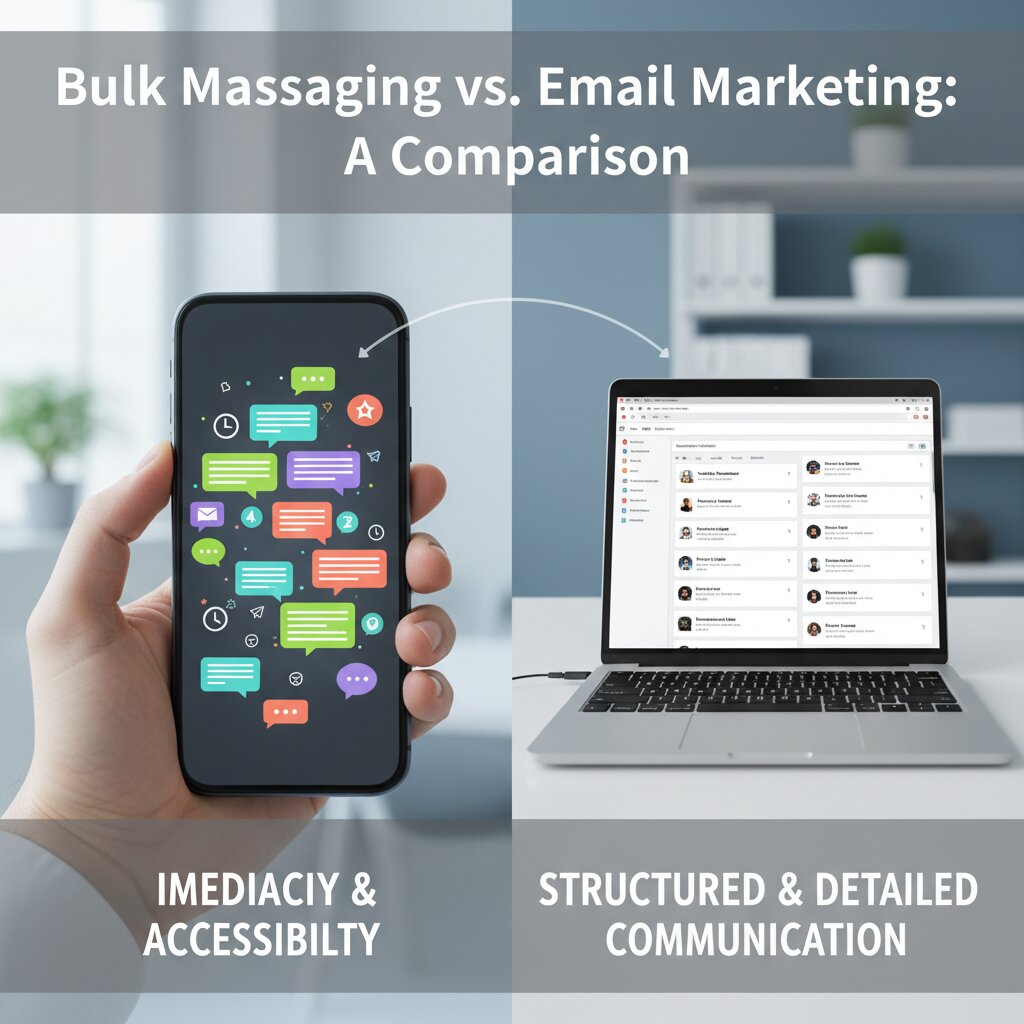 To truly understand the value of Bulk Messaging, it helps to compare it directly with another popular channel: email marketing. Both have their place, but they serve different purposes.
|
Feature |
Bulk Messaging |
Email Marketing |
|---|---|---|
|
Open Rate |
Extremely High (often 90%+) |
Moderate (usually 15-25%) |
|
Response Time |
Minutes |
Hours or Days |
|
Content Length |
Short, concise, punchy |
Long, detailed, visually rich |
|
Best Use Case |
Urgent alerts, flash sales, reminders |
Newsletters, detailed content, receipts |
|
Cost |
Low to Moderate |
Very Low |
|
Click-Through Rate |
High (often 10-15%) |
Lower (usually 2-5%) |
This table clearly illustrates why Bulk Messaging dominates when you need immediate action. While email is excellent for storytelling and long-form content, Bulk Messaging is the undisputed champion of urgency and quick conversions.
Pro Tips and Expert Insights for Maximum Engagement
To elevate your Bulk Messaging strategy from good to exceptional, apply these expert-level tactics. These insights will help you squeeze every drop of value from your campaigns.
Create Irresistible Exclusivity
Make your Bulk Messaging subscribers feel like VIPs. Offer deals, early access, and content that they cannot find on your website, email list, or social media. When customers know that your Bulk Messaging channel provides unique value, they will eagerly anticipate your texts and rarely unsubscribe.
Leverage the Power of Personalization
Go beyond just using the customer’s first name. True personalization in Bulk Messaging involves tailoring the offer to their specific interests. If a customer frequently buys running shoes, send them a Bulk Messaging alert when new running gear arrives. You can connect your Bulk Messaging tool with a customer relationship management system to access this rich data.
Utilize Interactive Elements
Bulk Messaging does not have to be a one-way street. Encourage replies. Run polls, ask for feedback, or set up automated keyword responses. For example, “Text WIN to enter our giveaway” transforms a static Bulk Messaging blast into an interactive brand experience.
Implement A/B Testing
Never rely on guesswork. Use A/B testing for your Bulk Messaging campaigns. Test two different offers, try out different calls-to-action, or experiment with the timing of your messages. Analyzing the data from these tests allows you to continuously optimize your Bulk Messaging performance.
Create a Sense of Urgency
Because Bulk Messaging drives immediate action, pairing it with urgency creates a powerful combination. Use phrases like “Today Only,” “Flash Sale Ends at Midnight,” or “Limited Stock Available” in your Bulk Messaging texts to prompt instant clicks and rapid
Platforms, Compliance, and Best Practices
 Choosing the right bulk messaging platform and adhering to legal standards are critical for sustainable success. Below, we outline the top solutions and key compliance considerations.
Top Bulk Messaging Platforms
- Twilio: Developer-centric API supporting SMS, MMS, WhatsApp, and voice. Known for reliability and global reach.
- SendinBlue: Unified email and SMS marketing with CRM integration, advanced segmentation, and intuitive workflows.
- TextMagic: User-friendly SMS service featuring bulk sending, scheduling, and two-way chats ideal for small businesses.
- Plivo: Scalable SMS and voice platform offering competitive pricing and extensive documentation for developers.
- Mailchimp (with SMS add-on): Industry-leading email tool extended with SMS capabilities, providing a holistic approach to multichannel campaigns.
Compliance Essentials
Noncompliance can lead to steep fines, blacklisting, and reputational damage. This year (2026), it’s vital to stay aligned with global regulations:
- Obtain Explicit Consent: Always secure opt-in before sending commercial messages. Double opt-in methods improve list quality.
- Offer Simple Opt-Out: Include an unsubscribe link or STOP code in every SMS or email.
- Respect Preferences: Honor do-not-call lists and global unsubscribe requests without delay.
- Monitor Frequency: Limit message volume to avoid subscriber fatigue. Use engagement metrics to adjust cadence.
- Review Regulatory Bodies: Familiarize your team with TCPA, CAN-SPAM (US), GDPR (EU), and other regional statutes. For guidance, visit the FTC Business Center.
Best Practices for Sustained Success
Maintain high deliverability by cleansing your lists regularly—remove invalid numbers and inactive subscribers. Rotate SMS sender IDs or email sending domains to prevent blacklisting. Monitor key metrics such as delivery rate, open rate, click-through rate (CTR), conversion rate, and unsubscribe rate. Continuously optimize content, timing, and segmentation rules based on performance data.
By selecting a robust platform, adhering to legal requirements, and implementing best practices, you’ll build trust with your audience and ensure long-term campaign effectiveness.
