

This blog explains how bulk messaging strategies improve engagement through segmentation, personalization, automation, timing, analytics, and retention. It highlights modern techniques that help businesses optimize communication, boost conversions, and build stronger long-term customer relationships effectively.
Audience segmentation is a key part of effective messaging campaigns, allowing businesses to divide users into groups based on behavior, demographics, or interests. This ensures messages are more relevant and personalized, increasing engagement rates significantly. Instead of sending generic messages, modern bulk messaging strategies focus on targeted communication that speaks directly to each segment’s needs. Businesses can group audiences by purchase history, location, or activity level to improve message effectiveness and relevance. By using advanced targeting methods, marketers reduce message fatigue and improve customer response rates. Segmentation ensures every campaign delivers value, making messaging efforts more efficient and impactful for long-term marketing success while supporting stronger customer relationships and better conversion outcomes.
Personalization for Higher Engagement
Personalization plays a major role in modern messaging campaigns, helping businesses create more meaningful connections with their audience. By using customer data such as names, preferences, and past interactions, companies can make messages feel more direct and engaging. Strong bulk messaging strategies use dynamic content to tailor offers and recommendations for each user. This increases trust and encourages higher response rates compared to generic messaging. Personalization also improves customer loyalty by making users feel valued and understood. When businesses apply smart communication techniques, they can turn simple messages into powerful engagement tools that drive conversions, strengthen relationships, and improve long-term customer retention while enhancing overall marketing effectiveness across different channels and audience groups.
Automation in Messaging Campaigns
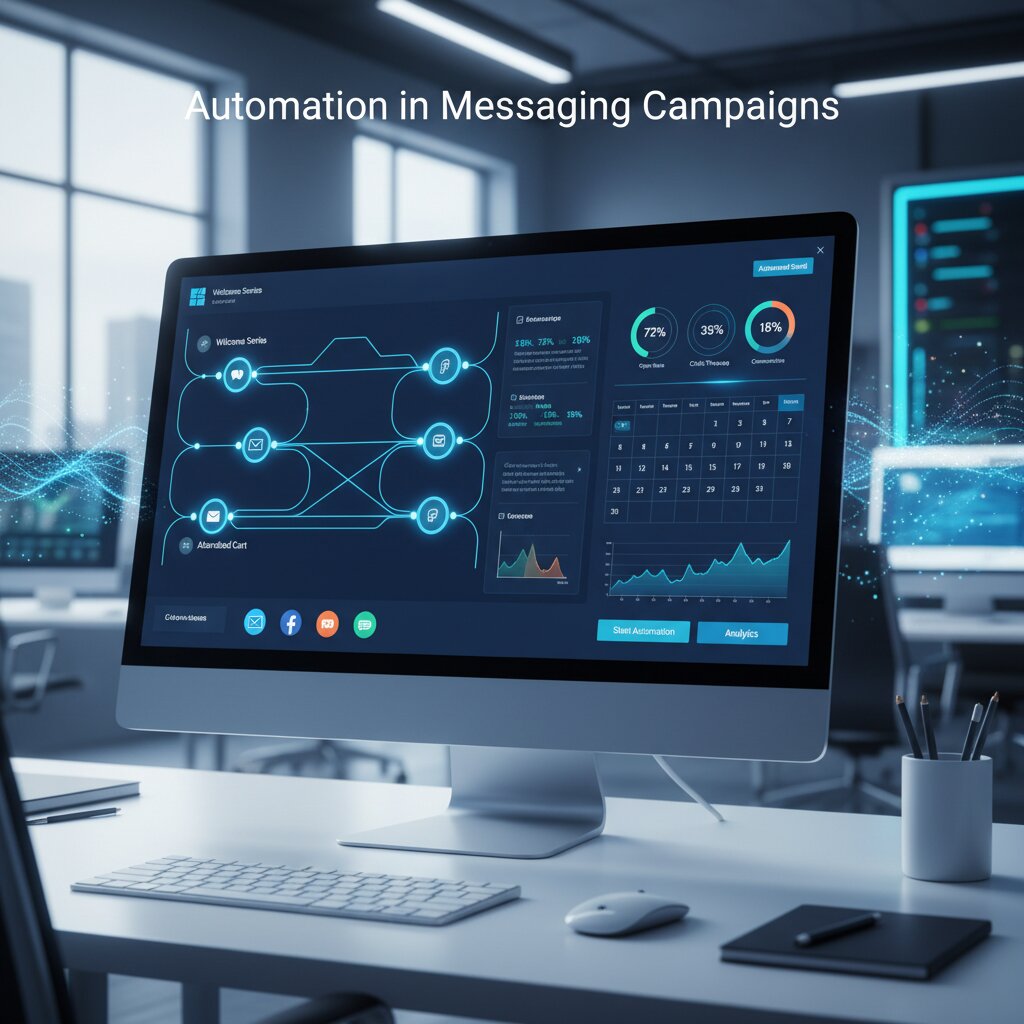 Automation has transformed modern messaging systems by making large-scale communication faster, easier, and more efficient. With automated systems, businesses can schedule messages, trigger responses based on user actions, and manage campaigns without manual effort. These bulk messaging strategies ensure timely delivery and consistent communication across all users, improving reliability. Automation also reduces human error and improves overall performance by allowing marketers to focus on strategy instead of execution. By integrating automation tools, messaging campaigns become more scalable and data-driven. This helps businesses maintain consistent engagement while saving time and resources in their marketing operations. Overall, automation strengthens efficiency and allows companies to handle high-volume messaging without losing personalization or message quality.
Timing Optimization for Maximum Response
Timing is a critical factor in successful messaging campaigns, as sending messages at the right moment can greatly improve engagement and response rates. Businesses analyze user behavior to determine optimal sending times that align with customer activity patterns. Well-planned bulk messaging strategies ensure messages are not ignored or sent at inconvenient hours, which can reduce effectiveness. Factors like time zones, peak engagement hours, and user habits play a key role in timing optimization. By refining delivery schedules, messaging strategies help businesses maximize visibility and interaction while maintaining a positive user experience. Proper timing increases open rates, strengthens engagement, and ensures communication feels natural rather than intrusive, improving overall marketing performance significantly.
A/B Testing for Performance Improvement
A/B testing is an important technique in messaging optimization, allowing marketers to compare different message versions to identify the most effective one. Businesses test variations in wording, tone, timing, and call-to-action to understand what drives better engagement. These bulk messaging strategies rely on real data rather than assumptions, making campaigns more efficient and result-driven. A/B testing helps refine messaging over time, ensuring continuous improvement in performance and audience response. By consistently applying testing methods, businesses can optimize communication approaches and achieve higher conversion rates through better decision-making. This process also reduces wasted effort and ensures every campaign is backed by measurable insights, leading to smarter and more impactful marketing outcomes.
Compliance and Permission-Based Communication
 Compliance is a crucial part of ethical messaging campaigns, ensuring that businesses send messages only to users who have opted in. This builds trust and prevents legal issues related to spam or unauthorized communication. Strong bulk messaging strategies follow regulations such as consent collection, opt-out options, and data protection rules. Respecting user privacy improves brand reputation and reduces message complaints, which is essential for long-term success. By focusing on compliance, businesses not only protect themselves legally but also strengthen customer relationships. Ethical communication ensures users feel safe and respected, which increases engagement and loyalty. Maintaining transparency in messaging practices helps brands build credibility and sustain positive customer experiences across all marketing channels.
Multi-Channel Messaging Integration
Modern messaging approaches extend beyond SMS and include multiple platforms such as WhatsApp, email, and push notifications. This multi-channel approach ensures that messages reach users through their preferred communication methods, increasing engagement potential. By integrating different platforms, bulk messaging strategies improve visibility, consistency, and conversion rates across all channels. Consistent messaging helps strengthen brand identity and customer experience by maintaining uniform communication. Businesses that adopt multi-channel communication can interact with users more effectively and maintain continuous engagement across various digital touchpoints. This integrated approach ensures customers receive timely and relevant updates, improving satisfaction and boosting overall marketing success while supporting a more connected and seamless communication experience across platforms.
RM Integration for Smarter Messaging
CRM integration plays a vital role in improving modern messaging systems by connecting customer data with communication platforms. It allows businesses to design more intelligent and data-driven marketing. With the help of bulk messaging strategies, companies can use CRM insights to understand customer behavior, purchase history, and engagement patterns. This makes messaging more accurate and personalized. Instead of sending random promotions, businesses can deliver highly relevant content that matches user needs. CRM-based messaging also improves automation and tracking efficiency, helping marketers manage large audiences with ease. When combined with strong bulk messaging strategies, CRM systems create a seamless flow of data that enhances targeting, engagement, and overall marketing performance.
Key Points:
- Improves customer data accuracy
- Enhances message personalization
- Supports automated campaign triggers
- Strengthens customer relationship management
| Feature | CRM-Based Messaging | Non-CRM Messaging |
|---|---|---|
| Targeting Accuracy | High | Low |
| Personalization | Advanced | Basic |
| Automation | Strong | Limited |
| Engagement Rate | Higher | Moderate |
Analytics and Campaign Performance Tracking
 Analytics play a vital role in optimizing messaging campaigns, helping businesses measure performance through key metrics like open rates, click-through rates, and conversions. These insights allow marketers to understand what works and what needs improvement over time. Data-driven bulk messaging strategies help refine campaigns for better results and improved audience targeting. Tracking performance also helps identify user behavior trends and engagement patterns that guide future decisions. By using analytics effectively, businesses can continuously improve their messaging strategies, making campaigns more efficient, targeted, and successful in achieving marketing goals. This approach ensures every campaign is backed by measurable data, leading to smarter optimization and stronger marketing outcomes.
Customer Retention Through Messaging
Customer retention is one of the main goals of messaging campaigns, as maintaining existing customers is often more valuable than acquiring new ones. Businesses use messaging to send personalized offers, updates, and loyalty rewards that keep users engaged and connected. Effective bulk messaging strategies help reduce churn by maintaining regular and meaningful communication with customers. Retention-focused messaging builds stronger relationships and increases customer lifetime value over time. By using smart communication methods, businesses can ensure long-term engagement, stronger loyalty, and sustained growth through continuous interaction. This approach not only improves customer satisfaction but also helps brands build a stable and loyal audience base for future marketing success.
Lead Nurturing Through Messaging
Lead nurturing is an essential part of long-term marketing success, helping businesses guide potential customers through the buying journey. Using effective bulk messaging strategies, companies can maintain consistent communication with leads and gradually build trust. Instead of pushing immediate sales, messaging focuses on providing value, education, and timely offers. This approach helps convert cold leads into loyal customers over time. Lead nurturing also ensures that no potential customer is lost due to a lack of engagement. When combined with structured bulk messaging strategies, businesses can create automated workflows that send the right message at each stage of the customer journey, improving conversion rates and strengthening relationships.
Key Points:
- Builds trust with potential customers
- Improves long-term conversion rates
- Supports automated customer journeys
- Reduces lead drop-off rates
| Stage | Messaging Purpose | Example Message Type |
|---|---|---|
| Awareness | Introduce brand | Welcome messages |
| Interest | Educate user | Product info |
| Decision | Encourage purchase | Offers/discounts |
| Retention | Build loyalty | Updates/rewards |
Future of Bulk Messaging Strategies
The future of messaging is becoming more intelligent, automated, and highly personalized as technology continues to evolve. Advanced AI, predictive analytics, and real-time customer behavior tracking will reshape how businesses design their communication approaches. Modern bulk messaging strategies will increasingly focus on hyper-personalization, where every message is tailored based on user intent and context. Automation will become more advanced, allowing real-time decision-making without manual input. Integration with multiple digital ecosystems, such as CRM, e-commerce platforms, and social media, will further enhance efficiency. In the coming years, bulk messaging strategies will prioritize customer experience, privacy, and meaningful engagement over simple mass communication. This shift will help businesses build deeper relationships and achieve stronger long-term marketing performance.
Conclusion
In conclusion, messaging campaigns play a crucial role in modern digital marketing by enabling businesses to communicate effectively at scale. From segmentation and personalization to automation and analytics, these approaches help brands improve engagement and achieve better results. When implemented correctly, messaging systems enhance customer relationships, boost conversions, and increase overall marketing efficiency. Businesses that continuously refine their bulk messaging strategies can stay competitive in a rapidly evolving digital landscape. Ultimately, success depends on how well these strategies are planned, executed, and optimized for long-term growth.
Frequently Asked Questions
1: What are bulk messaging strategies?
Bulk messaging strategies are planned, methodical approaches to sending large volumes of text messages to a subscribed audience. These strategies focus on segmentation, timing, compliance, and personalization to maximize engagement and return on investment.
2: Do I need permission to send mass texts?
Yes, absolutely. Under regulations like the TCPA, businesses must obtain explicit, written consent from consumers before sending any promotional text messages. Failing to do so can result in severe legal and financial penalties.
3: How often should I send bulk messages to my customers?
The ideal frequency depends on your industry and the value of your messages. Generally, two to four times a month is a good benchmark for promotional texts. Informational texts, like shipping updates, should be sent as needed based on customer transactions.
4: What is the ideal length for a bulk SMS message?
You should aim to keep your text messages under 160 characters. This ensures the message is delivered as a single segment, keeping costs down and ensuring the recipient can read the entire message quickly.
5: How do I stop my bulk messages from looking like spam?
To avoid looking like spam, always identify your brand in the message, personalize the content, avoid excessive capitalization or special characters, and never use misleading links. Most importantly, only message people who have opted in.
6: What is the difference between SMS and MMS?
SMS (Short Message Service) consists of text-only messages limited to 160 characters. MMS (Multimedia Messaging Service) allows you to include images, GIFs, audio, and video, and offers a much higher character limit, though it costs more to send.
7: How can I measure the success of my SMS campaigns?
You can measure success by tracking key performance indicators (KPIs) such as delivery rate, open rate, click-through rate (CTR), conversion rate, and opt-out rate. Analyzing these metrics helps you refine your approach over time.
8: Can I automate my bulk messaging?
Yes, modern SMS platforms allow you to set up automated workflows. You can schedule texts in advance or set up triggers that send messages automatically when a customer takes a specific action, such as abandoning a cart or celebrating a birthday.
9: What is a short code in SMS marketing?
A short code is a 5- or 6-digit phone number used specifically for sending mass texts. Short codes are highly regulated and vetted by cell phone carriers, allowing them to send messages at a much faster rate than standard 10-digit phone numbers.
10: Why do people opt out of bulk text lists?
People typically opt out if they receive too many messages, if the content is no longer relevant to them, or if the messages feel intrusive or spammy. Providing consistent value is the key to minimizing your unsubscribe rate.
